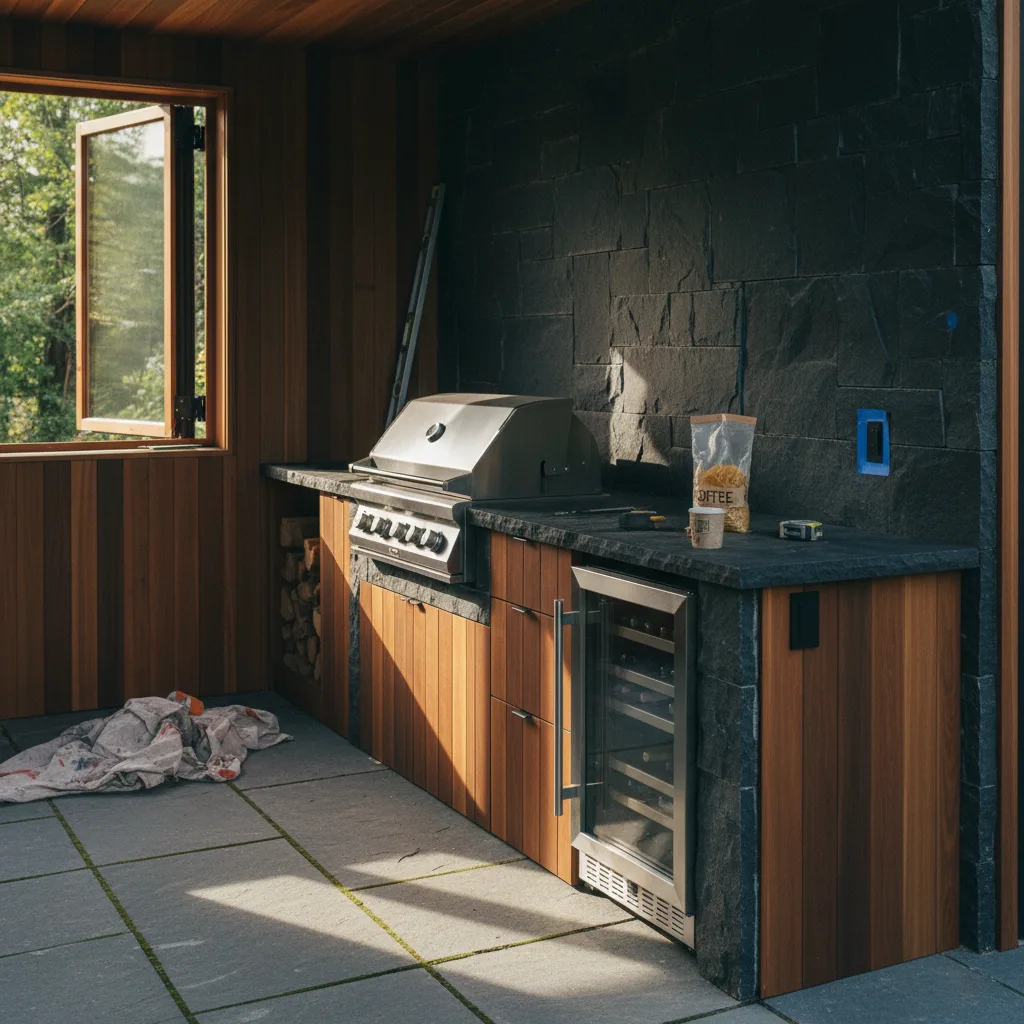
Building a custom outdoor kitchen in Seattle takes between 12 and 20 weeks, from design sign-off to final inspection. The timeline can start lower, around eight weeks, for simpler, prefab island units that don't require extensive utility runs or a permanent roof structure. But for a fully integrated build-out in a neighborhood like Queen Anne, the single biggest delay is the Seattle Department of Construction & Inspections (SDCI) plan review, especially for drainage. The constant drizzle isn't just a mood; it's a line item on your permit application. A proper plan for water management is non-negotiable and can add weeks to the approval process before a single shovel hits the ground.
In a Nutshell
- Total Timeline: 12 to 20 weeks for a typical custom project.
- The Four Phases: The project breaks down into four distinct stages: Design and Permits; Site Prep and Foundation; Framing and Rough-In; and Finishes and Final Inspection.
- Biggest Delay Risk: Permit issuance from the Seattle Department of Construction & Inspections (SDCI). Incomplete plans or required revisions for drainage and seismic support can send you to the back of the line.
- Contingency Planning: Don't start without a 10 to 15 percent contingency fund. The National Association of Home Builders (NAHB) recommends this buffer, and in Seattle, it often gets used for unexpected excavation or drainage work.
Phase 1: Design and Permits (weeks 1, 6)
3 Seattle outdoor kitchen builders, editor-screened. 4 questions.
See my 3 matchesThis is where the project lives on paper. Your contractor or designer develops architectural and structural plans that detail everything from the footing depth to the load path of the pergola. These plans must account for Seattle's specific seismic and weather-proofing requirements. Once you reach a scope-lock date, meaning the design is final, your outdoor kitchen contractor in Seattle will submit the package to the Seattle Department of Construction & Inspections (SDCI) to pull the necessary permits. Any project with new gas lines, significant electrical work, or a permanent roof structure requires a permit. The most common holdup is an incomplete submission. SDCI will reject plans that lack a clear drainage strategy or miss specifications for utility trenching. An experienced contractor knows exactly what the plan checkers are looking for and gets it right the first time.
Phase 2: Site Prep and Foundation (weeks 7, 9)
Once the permit is issued, site work begins. This phase is all about what's under your feet. The crew will excavate the area, grade the land for proper drainage, and trench for utility lines. This involves coordinating with Seattle City Light for electrical, Puget Sound Energy for natural gas, and Seattle Public Utilities for water and drain lines. Seattle's geology, often dense glacial till, can make excavation slow and difficult. You might hit a boulder that requires heavy equipment to move. After trenching, footings are dug and poured to support the structure, followed by a concrete slab if it's in the design. The constant threat of rain means the crew must be ready to cover fresh concrete at a moment's notice to ensure a proper cure. This phase ends when the foundation is set and has passed its initial inspection.
Phase 3: Framing and Rough-In (weeks 10, 12)
With a solid foundation, the structure takes shape. Framers will build the cabinet bases, walls, and any overhead roof or pergola structure. This isn't like building a deck; an outdoor kitchen structure must support heavy countertops and withstand year-round moisture. All lumber must be pressure-treated or a naturally resistant species like cedar. Following the framers, the trades come in for the rough-in. A plumber runs water supply and drain lines. An electrician runs conduit for outlets, lighting, and appliances. A gas fitter runs the line for the grill or fire pit. Each trade's work is left exposed for inspection. The city inspector will visit the site with the inspection card, signing off on plumbing, electrical, and framing sequentially. Nothing gets covered up until each of these rough-in inspections is passed.
Phase 4: Finishes and Final Inspection (weeks 13, 16)
This is the phase where the design comes to life. Masons apply stone or brick veneer, countertop installers template and set the granite or concrete surfaces, and electricians return to install outlets, switches, and light fixtures. The expensive parts arrive now: the grill, refrigerator, sink, and any other appliances are installed and connected. Carpenters might add final trim, cabinet doors, and shelving. Every step is about careful fit and finish, and it can't be rushed. Once all work is complete, the project is ready for its final inspection from SDCI. The inspector verifies that all work matches the approved plans and meets code. They check GFCI outlets, gas connections, and proper clearances. Passing this inspection means the project is officially complete and the city has signed off on the construction.
Three Representative Projects from 2026
Three representative projects from 2026, scoped similarly, reconstructed from Renology's Project of the Day network and used here in aggregate form:
- Ballard Craftsman: A 12-foot L-shaped kitchen with a built-in gas grill, sink, and under-counter refrigerator, set on a new paver patio with a cedar pergola. The project required new gas and electrical lines run from the main house. Total Cost: $48,500. Total Time: 14 weeks.
- West Seattle View Home: An extensive 20-foot linear kitchen under a new covered structure with lighting and radiant heaters. It included a high-end grill, smoker, pizza oven, and bar seating for six. Required significant grading and a small retaining wall. Total Cost: $92,000. Total Time: 19 weeks.
- Capitol Hill Townhouse: A compact, high-efficiency setup on an existing concrete patio. This project used a modular stainless steel cabinet system with a drop-in grill and refrigerator, requiring only a new dedicated electrical circuit. Total Cost: $26,000. Total Time: 9 weeks.
What Can Compress This Timeline
Time is money, but you can't buy more of it from the city permit office. The homeowner who saves four weeks does three things before the first shovel breaks ground. First, they treat the scope-lock date as final. Every change order after permits are pulled requires a revision, which sends your plans back to the review queue. Second, they order all long-lead-time materials, like the grill, custom cabinets, and countertops, the day the contract is signed. Waiting until framing is done to order a grill that takes ten weeks to arrive is a classic mistake. Third, they hire a design-build firm or an outdoor kitchen contractor in Seattle with a dedicated permit expediter. These pros know the SDCI process cold and submit a perfect package the first time, avoiding weeks of back-and-forth corrections.
What Blows It Up
Three things reliably turn a 14-week project into a 20-week headache. The first is discovering unexpected site conditions. In Seattle, this often means hitting poorly draining soil that requires extensive French drains or finding the sewer line isn't where the old plans said it was. Second is scope creep. Deciding to add a gas fire pit or extend the patio halfway through the build is the surest way to destroy the schedule and budget. It triggers a permit revision and a new round of inspections. Third is failing inspections. A sloppy rough-in that gets red-tagged by the inspector can cause a week of delays while the work is fixed and the inspector is rescheduled. The National Association of Home Builders recommends a ten to fifteen percent contingency on renovations in homes over thirty years old. It's a buffer for exactly these kinds of surprises.
What Should Be in Your Contractor's Schedule
Your contractor's proposal should include a detailed, week-by-week schedule. A simple start and end date is not enough. Demand a document that includes specific milestones, because what gets measured gets managed. A professional schedule for Seattle outdoor kitchens will have, at minimum, these line items:
- Final design approval and scope-lock date
- Permit plan submission to SDCI
- Anticipated permit issuance date
- Appliance and long-lead material order dates
- Excavation and grading start and completion
- Footing and foundation inspection date
- Framing and utility rough-in start and completion
- Rough-in inspections (gas, electrical, plumbing)
- Countertop template and installation dates
- Final inspection date
Understanding these steps is key to a smooth project. We cover the city's requirements in our comprehensive [Seattle outdoor kitchens permit playbook 2026](/guides/seattle-outdoor-kitchens-permit-playbook-2026).
Sources & Methodology
Cost ranges in this guide draw on the following named industry sources, public agency datasets, and Renology editorial research.
- Seattle Department of Construction & Inspections (SDCI) Permit Timelines (2026)
- National Association of Home Builders (NAHB) Remodeling Market Index (Q1 2026)
- Washington State Department of Labor & Industries (L&I) Prevailing Wage Data (2026)
- National Kitchen & Bath Association (NKBA) Outdoor Kitchen Design Guidelines (2025)
- Remodeling Magazine, Cost vs. Value Report, Seattle WA (2025)
- Renology Project of the Day (POTD) Network Data for Seattle (2023-2026)
Renology Take
The brochures for modular outdoor kitchens promise a finished project in a few weeks. That's a sales pitch, not a construction schedule. A permanent outdoor kitchen in Seattle is a serious addition to your home. It involves excavation, concrete, multiple utility lines, and rigorous inspections to ensure it's safe and durable, especially given our seismic and weather realities. The timeline reflects this complexity. A contractor who promises a six-week turnaround for a custom build is either omitting the permit phase or doesn't have enough experience working in this city. A realistic 12 to 20-week timeline isn't a sign of a slow contractor; it's the mark of an honest one who understands the process and builds something that will last as long as the house itself. It's not furniture. It's an extension of your home's load path, and it has to be built that way.
Get 3 Seattle outdoor kitchen bids in 48 hours.
Our editors already screened Seattle outdoor kitchen builders. Answer 4 questions; we send 3 written bids inside 48 hours, with the real price for your scope, not their inflated first-call number.
Send my 3 bidsFree. No commission. If a match doesn't fit, we'll send another.