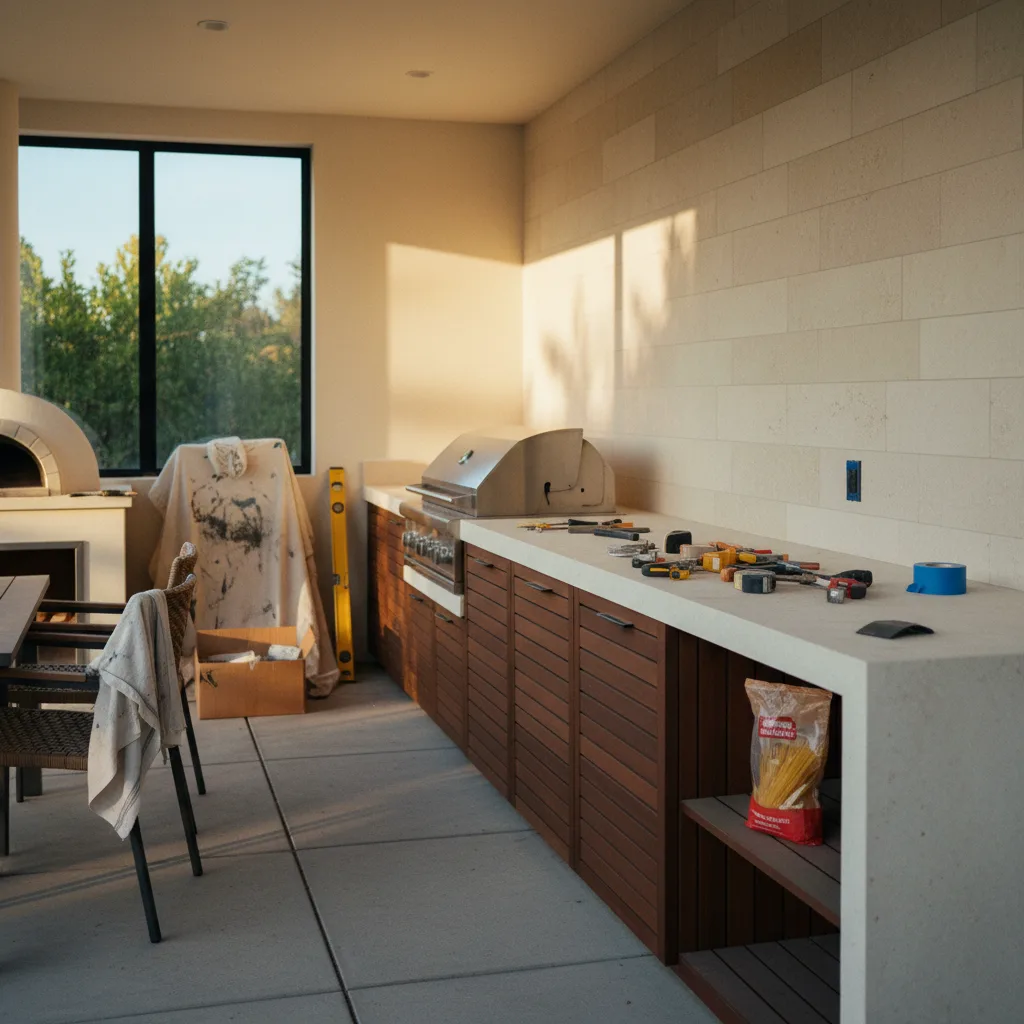
A custom outdoor kitchen in Los Angeles takes between 12 and 20 weeks from design to final inspection. Anyone who tells you otherwise is selling a brochure, not a build. The timeline can start lower, in the 6 to 8-week range, for simpler prefab units that only need utility hookups. But for a built-in-place project with a concrete foundation, gas lines, and a pergola, plan on four months. The biggest single delay is the Los Angeles Department of Building and Safety (LADBS) plan check. I’ve seen straightforward plans for a Mar Vista project sit in review for six weeks before a shovel ever hits the dirt. Time is honest. The city's timeline is the one that matters.
In a Nutshell
- Total Timeline: 12 to 20 weeks for a custom build.
- Four Key Phases: Design and Permits, Site Prep and Foundation, Framing and Rough-In, Finishes and Final Inspection.
- Biggest Delay Risk: Unforeseen conditions during excavation. You never know what's under an old patio slab until you break it up.
- Contingency Fund: Plan for 10-15% of your total budget for surprises. If you don't need it, you have a surplus. If you do, you have a project that finishes.
Phase 1: Design and Permits (Weeks 1, 6)
3 Los Angeles outdoor kitchen builders, editor-screened. 4 questions.
See my 3 matchesThis is where the project is built on paper. It's the most important phase and often the longest. Your architect or designer creates detailed plans showing dimensions, materials, appliance locations, and critically, how utilities like gas, water, and electricity will be routed from the main house. Once you sign off, your outdoor kitchen contractor Los Angeles submits these plans to the Los Angeles Department of Building and Safety (LADBS). The city reviews them for code compliance, from seismic requirements for the footings to proper ventilation for the grill. Any errors or omissions result in corrections, sending you back to the designer and adding weeks to the timeline. An experienced contractor who knows LADBS expectations can get this right the first time. The goal is to get your plans stamped "Ready to Issue" (RTI) so work can begin.
Phase 2: Site Prep and Foundation (Weeks 7, 8)
With an approved permit in hand, the physical work starts. This phase is about demolition, excavation, and creating a solid base. Any existing patio, landscaping, or hardscape is removed. Then, trenches are dug for the new utility lines. This is where we coordinate with the Los Angeles Department of Water and Power (LADWP) and SoCalGas for service connections. The ground is graded for proper drainage, away from the house. Finally, we form and pour the concrete foundation, either a slab-on-grade or individual footings for the island structure. Before any concrete is poured, an LADBS inspector must visit the site to approve the footing depth and rebar placement. A failed footing inspection means a costly delay. This is the foundation for the entire project; it has to be perfect.
Phase 3: Framing and Rough-In (Weeks 9, 11)
Once the slab is cured, the skeleton of your outdoor kitchen goes up. We use steel studs or concrete masonry units (CMUs) to frame the island, bar seating, and any overhead structures. This framing defines the final shape and creates the cavities for appliances and utilities. Immediately after framing, the trades begin their rough-in. The plumber runs water supply and drain lines. The electrician runs conduit for outlets, switches, and lighting. The gas fitter runs the line for the grill and any fire features. Each trade works in a specific sequence. Their work must pass a multi-part rough-in inspection from LADBS before any backer board or cladding can be installed. The inspector signs the on-site inspection card for each utility, confirming that the work is safe and to code. This is a critical milestone.
Phase 4: Finishes and Final Inspection (Weeks 12, 16)
This is the phase where the project starts to look like the renderings. With the rough-in inspections cleared, we close up the framing with cement backer board. Then come the surface materials: stone veneer, stucco, or tile cladding is applied to the island walls. The countertop fabricator makes a template and returns a week or two later to install the granite, quartz, or concrete counters. Appliances like the grill, refrigerator, and sink are installed and connected. Electricians return to install outlets, switches, and light fixtures. The final step is the final inspection from LADBS. The inspector verifies every detail, from GFCI protection on outlets to the anti-tip bracket on the grill. A successful final inspection means the permit is closed, and your new outdoor kitchen is officially complete and safe to use.
Three Representative Projects from 2026
Three representative projects from 2026, scoped similarly, reconstructed from Renology's Project of the Day network and used here in aggregate form:
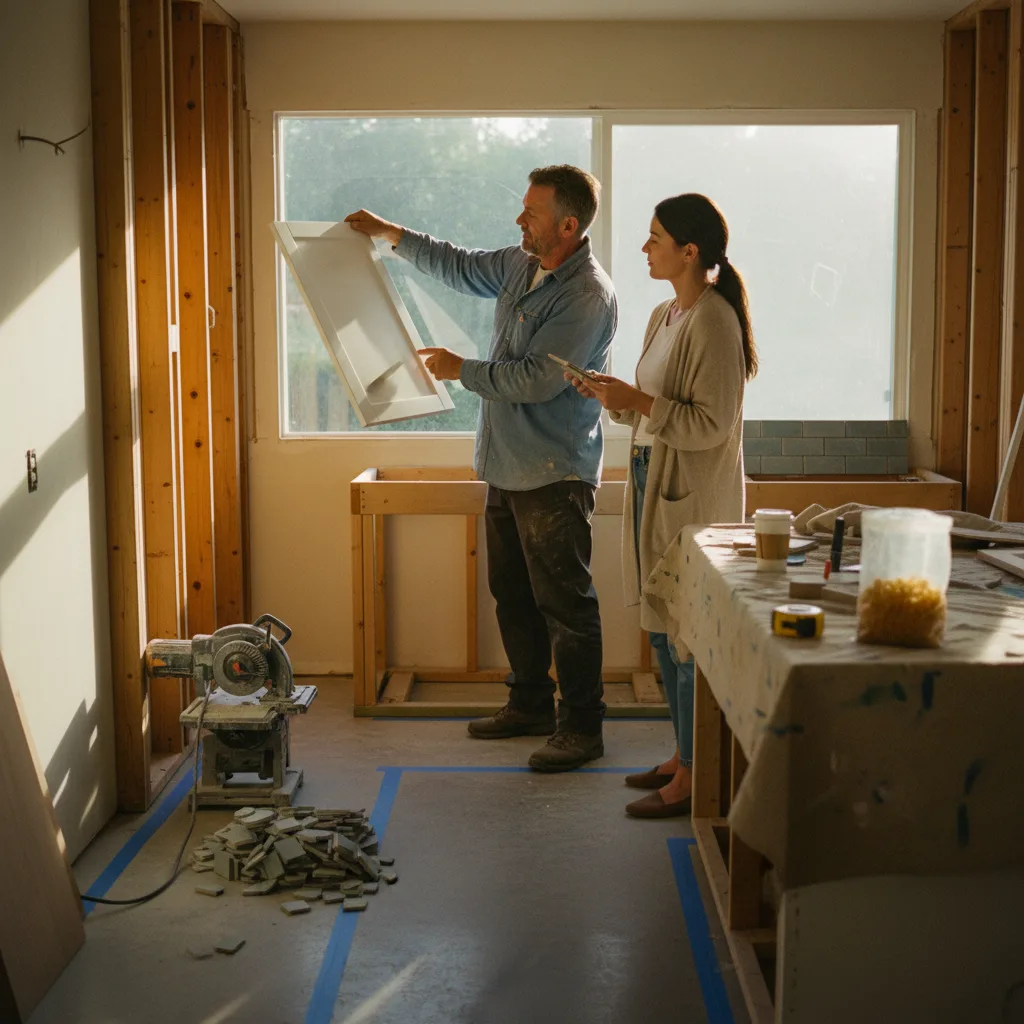
- Studio City Galley Kitchen: A 15-linear-foot L-shaped island with a built-in grill, outdoor refrigerator, and sink. Stucco finish with a granite countertop. The project involved a simple 20-foot trench for utilities. Total Cost: $38,000. Total Time: 13 weeks.
- Culver City Entertainer's Patio: A 25-linear-foot U-shaped island with bar seating, a high-end grill, a pizza oven, and extensive low-voltage lighting. Stone veneer finish with polished concrete countertops. Required significant grading and a new gas line run from the street meter. Total Cost: $72,000. Total Time: 18 weeks.
- Pasadena Hillside Build: A 30-linear-foot outdoor kitchen with a connected pergola, requiring deep engineered footings due to soil conditions. Included a sink, grill, side burners, and a fire pit. The complexity of the structure and hillside location added a month to the permit phase. Total Cost: $115,000. Total Time: 22 weeks.
What Can Compress This Timeline
The homeowner who saves six weeks does three things before signing a contract. First, they hire a design-build firm. Having one company handle both design and construction eliminates the inevitable delays caused by architects and contractors blaming each other for plan errors. Second, they achieve scope-lock early. They pick every appliance, every tile, and every finish before the permit is even submitted. Change orders are schedule killers. Third, they favor materials that are in-stock locally. That custom-ordered Italian tile looks great online, but waiting eight weeks for it to clear customs will stall your entire project. Decisiveness is the ultimate time-saver.
What Blows It Up
Three things reliably turn a 16-week project into a 24-week ordeal. The first is unforeseen site conditions. Digging into a yard can reveal anything from old septic tanks to a web of undocumented sprinkler lines, each requiring time and money to address. The second is scope creep. Deciding to add a pergola or a fire pit halfway through isn't a small change; it's a new design, a new engineering report, and often a permit revision that puts you back at the end of the line at LADBS. The third, especially in planned communities, is the HOA. Their architectural review process can add months before you even get to the city. The National Association of Home Builders recommends a ten to fifteen percent contingency on renovations in homes over thirty years old.
What Should Be in Your Contractor's Schedule
Your contractor's proposal should include a detailed, week-by-week schedule with clear milestones. If it's just a start and end date, they don't have a real plan. A professional schedule for Los Angeles outdoor kitchens will include line items for:
- Scope-lock date for all materials and appliances
- Target date for permit submission to LADBS
- Target date for permit approval
- Site demolition and excavation start and finish dates
- Foundation inspection and pour date
- Framing start and finish dates
- Rough-in inspection dates for electrical, plumbing, and gas
- Countertop templating date
- Appliance delivery and installation window
- Target date for final inspection
A detailed schedule holds the contractor accountable and gives you a clear understanding of the project's flow. For more on navigating the city's process, see our [permit playbook](/guides/los-angeles-outdoor-kitchens-permit-playbook-2026).
Renology Take
The marketing for outdoor kitchens sells a lifestyle, often with a timeline that reflects a simple product assembly, not a construction project. They'll show you a beautiful island installed in a week. They don't show the five weeks of plan checks at LADBS, the week of digging trenches and pouring concrete, or the multiple inspections where a city official has total control over your schedule. The real outdoor kitchen los angeles cost is measured in both dollars and time. A contractor who is honest about a 16-week timeline isn't slow; they're experienced. They are building the inspections, the material lead times, and the unpredictability of construction into the plan. They are selling a predictable process, which is far more valuable than a fast promise.
Sources
- National Association of Home Builders (NAHB), Remodeling Market Index, Q1 2026
- California Department of Industrial Relations, Prevailing Wage Data for Los Angeles County, 2026
- Los Angeles Department of Building and Safety (LADBS), Permit Issuance Data, 2025
- National Kitchen & Bath Association (NKBA), Annual Design Trends Report, 2026
- Remodeling Magazine, Cost vs. Value Report, 2025
- Renology Project of the Day (POTD) Network, Los Angeles Metro Data, 2024-2026
Get 3 Los Angeles outdoor kitchen bids in 48 hours.
Our editors already screened Los Angeles outdoor kitchen builders. Answer 4 questions; we send 3 written bids inside 48 hours, with the real price for your scope, not their inflated first-call number.
Send my 3 bidsFree. No commission. If a match doesn't fit, we'll send another.