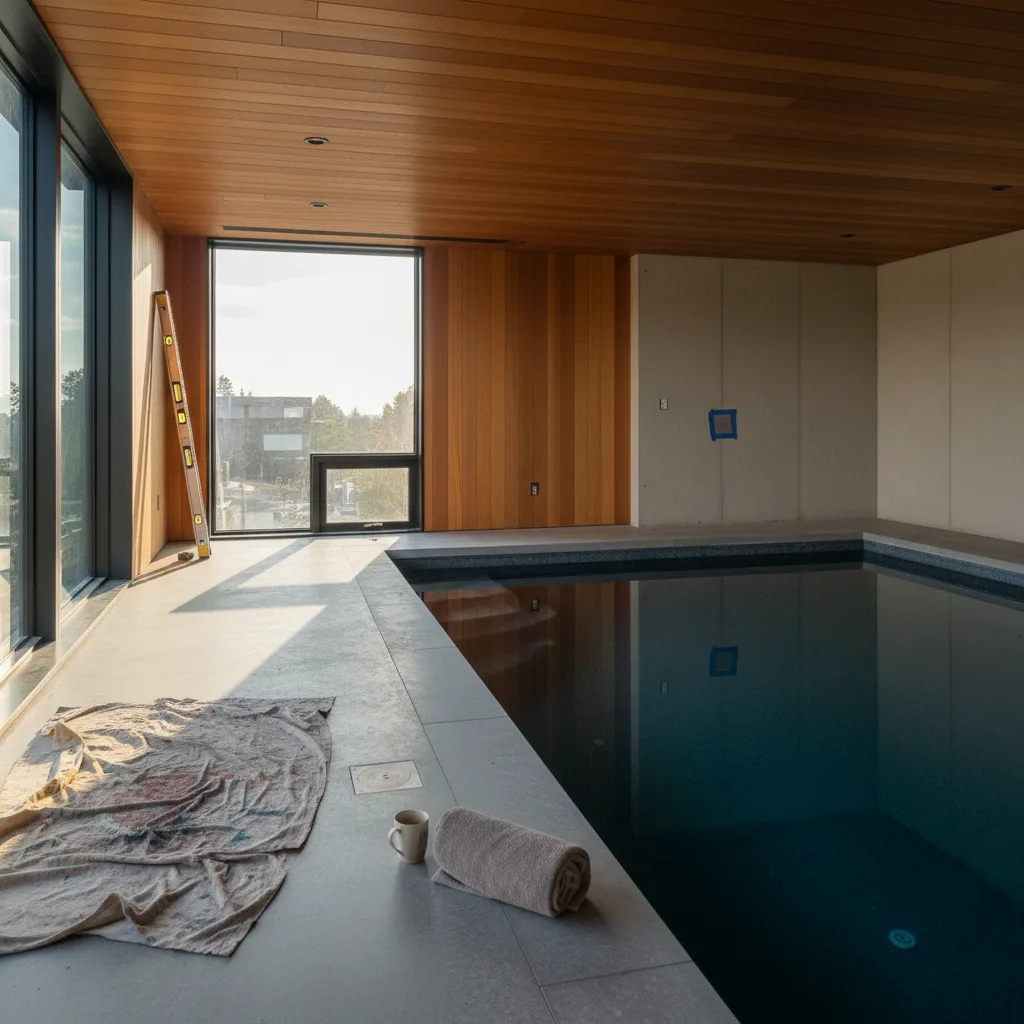
The simple backyard swimming pool is gone. In its place, Seattle homeowners are commissioning year-round wellness sanctuaries, with over 70% of new pool permits in King County now including integrated heating and spa features. The bright blue, kidney-shaped pool of the past is being replaced by a thoughtfully designed extension of the home, meant for daily use, not just a few sunny weekends in July.
In a Nutshell: The Pool as a Wellness Retreat
- The Big Idea: Pools are no longer just for summer recreation. They are becoming central to a home's design and a family's daily wellness routine, usable in all four Pacific Northwest seasons.
- The Trends: All-Season Plunge Pools, Dark & Moody Interior Finishes, and Integrated Thermal Ledges.
- What's Being Replaced: Oversized recreational pools, bright turquoise plaster, separate jacuzzi tubs, and expansive, heat-trapping concrete decks.
- What's Next: Fully automated covers and water systems, natural stone coping that connects to the landscape, and layered, architectural lighting schemes.
Trend 1: All-Season Plunge Pools Are the New Standard
The plunge pool, small and deep, is perfectly suited for the typical Seattle lot. More importantly, its smaller volume makes heating it for year-round use efficient and practical. We're seeing this trend explode in neighborhoods like Madrona and Queen Anne, where space is a premium. Instead of a large, cold body of water usable for eight weeks a year, homeowners are opting for a 10x15 foot heated pool that functions as a cold plunge in the morning and a warm soak in the evening. This is the pool as a daily ritual, not a summer novelty.
Trend 2: Dark Interior Finishes Create a Naturalistic Look
The era of the bright, artificial-looking cyan pool is over. The most requested interior finishes are now dark, moody, and reflective, mimicking the deep, clear waters of a mountain lake. Materials like PebbleTec's Black Onyx or WetEdge's Black Magic create a stunning, mirror-like surface that reflects the sky and surrounding greenery. Two major Seattle pool contractors confirmed that dark gray and black finishes now account for over half of their new build specifications for 2026, a complete reversal from just five years ago.
Trend 3: Integrated Spas and Thermal Ledges
The detached, bubbling hot tub is being absorbed directly into the pool's architecture. Spas are now being designed as an integrated element, often raised with a spillover edge that creates a gentle waterfall sound. Alongside this, the thermal ledge (or Baja shelf) has become a must-have. This wide, shallow shelf, typically 9 to 12 inches deep, provides a space for in-water lounge chairs and a safe play area for small children. It extends the pool's function from simple swimming to full-service lounging.
Trend 4: Hardscaping Goes Organic with Basalt and Travertine
Broom-finished concrete is out. Homeowners on Mercer Island and in Laurelhurst are opting for large-format pavers in natural, honed stone. Washington's own Pacific Basalt is a popular choice for its deep charcoal color and durability in our freeze-thaw climate. Silver travertine is another top contender, prized for its ability to stay cool underfoot during rare heatwaves. The goal is to erase the hard line between the pool deck and the garden, creating a unified outdoor living space.
Trend 5: Automation is No Longer a Luxury
3 Seattle pool builders, editor-screened. 4 questions.
See my 3 matchesFrom covers to chemistry, automation is now a baseline expectation. An automated safety cover, often from brands like Cover-Pools, is the number one requested feature for its safety, heat retention, and ability to keep pine needles and leaves out of the water. This is followed closely by automated water chemistry systems using AOP (Advanced Oxidation Process) or salt chlorine generation. Homeowners want to manage their pool from an app, not with a test kit and a bucket of chemicals. This is a key factor for anyone looking for a low-maintenance pool in Seattle.
Trend 6: Layered Lighting Creates Evening Ambiance
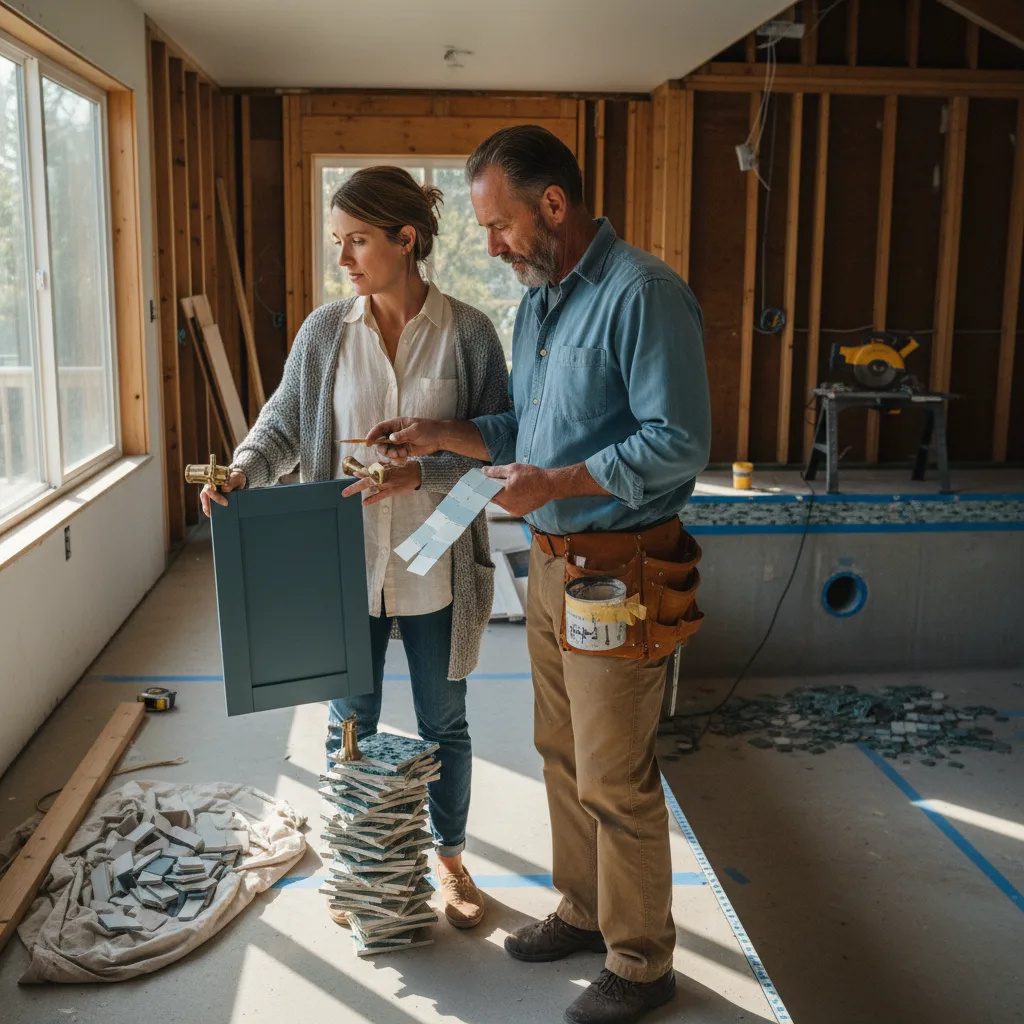
One giant floodlight is a thing of the past. The new approach to pool lighting is subtle and layered, treating the space like an interior room. This involves using multiple small, energy-efficient LED lights (often from Pentair or Jandy) set to a warm 2700K color temperature. Designers are placing them strategically to highlight the thermal ledge, illuminate steps, and cast a soft glow up at surrounding trees. The effect transforms the pool from a dark void at night into a captivating water feature.
Trend 7: The Pool as a Water Feature
Even when no one is swimming, the pool must be beautiful. This philosophy is driving the inclusion of features that provide year-round aesthetic and auditory pleasure. In view properties in West Seattle and Magnolia, knife-edge or infinity-edge designs create a smooth visual connection to Puget Sound. In more sheltered yards, sheer descent waterfalls built into a raised wall provide a calming, modern sound that masks neighborhood noise. The pool is now an integral part of the landscape architecture.
Trend 8: The Rise of the Pool House and Sauna
The pool is now the anchor for a complete wellness complex. The detached pool house is evolving from a simple changing room into a multi-functional space with a bathroom, kitchenette, and lounge area. Critically for the Pacific Northwest, we are seeing a surge in requests for integrated saunas. The Nordic cycle of hot sauna, cold plunge, and relaxation is a perfect fit for our climate and lifestyle, solidifying the pool's role as a center for health and well-being.
Pool Cost in Seattle for 2026
The cost to build a pool in Seattle has seen significant shifts, driven by material choices and labor rates. A basic vinyl-liner pool project can start lower, often in the $70,000 to $90,000 range for a simple installation, but most homeowners are opting for more permanent and feature-rich gunite (concrete) pools. The typical cost for a professionally designed and installed gunite pool in the Seattle area now ranges from $120,000 to $250,000+, depending on size, features, and site conditions.
Three modeled project scenarios for 2026, built from the Renology Cost Index and typical local scopes. These are illustrative estimates, not completed client projects:
- Queen Anne Plunge Pool: A 10x18 foot heated gunite plunge pool with an integrated spa, automated cover, and basalt patio cost $145,000.
- Mercer Island Rectangular Pool: A 15x35 foot classic rectangular pool with a thermal ledge, saltwater system, and extensive travertine decking came to $190,000.
- Bridle Trails Naturalistic Pool: A freeform pool with a dark pebble finish, sheer descent waterfall, and an adjacent sauna structure was completed for $265,000.
Labor is a significant component of the total pool cost in Seattle. According to Washington State L&I contractor licensing and labor rate data, skilled trades like excavation operators, steel rebar installers, and plasterers command premium wages in the Puget Sound region., challenging site access, steep slopes, or poor soil conditions, common in Seattle, can add 15-25% to the total project cost for necessary engineering and excavation. The National Association of Home Builders recommends a ten to fifteen percent contingency on renovations in homes over thirty years old. When you get quotes from a pool contractor in Seattle, it's critical to understand what is included in their scope. Our guide at /guides/seattle-pools-permit-playbook-2026 can help you prepare the right questions.
Sources & Methodology
See the Renology Methodology for how sources are reviewed, ranges are normalized, and planning-data limits are handled.
Cost ranges in this guide draw on the following named industry sources, public agency datasets, and Renology editorial research.
- Pool & Hot Tub Alliance (PHTA) 2025 Market Report (2025)
- Renology Project of the Day Network Data (2024-2026)
- Remodeling Magazine, Cost vs. Value Report (2025)
- Washington State L&I Contractor Data (2025)
- Interviews with Aqua Quip and Bellevue Master Pools (Q1 2026)
- National Association of Home Builders (NAHB) (2025)
Renology Take
The connecting thread through all these Seattle pool trends is a desire for sanctuary. In a region known for its gray skies and stunning natural beauty, the backyard has become a private resort. These are not ostentatious displays; they are quiet, considered investments in daily well-being. The material choices, from dark, lake-like interiors to native basalt decking, reflect a deep appreciation for the Pacific Northwest aesthetic. Homeowners are not just building a place to swim. They are creating a space to recharge, to connect with family, and to find a moment of peace, whether it's a cold plunge on a misty January morning or a warm soak under the stars on a clear August night. The minimalist decade is over; the age of the intentional, wellness-focused retreat has begun.
Seattle · pre-screened
Get 3 Seattle pool bids in 48 hours.
Our editors already vetted Seattle pool builders. Answer 4 questions and we send 3 written bids inside 48 hours, with the real price for your scope, not their inflated first-call number.
- Free, no commission
- Pre-screened locally
- Bids inside 48 hours
Takes about 60 seconds. We'll text you when bids arrive.