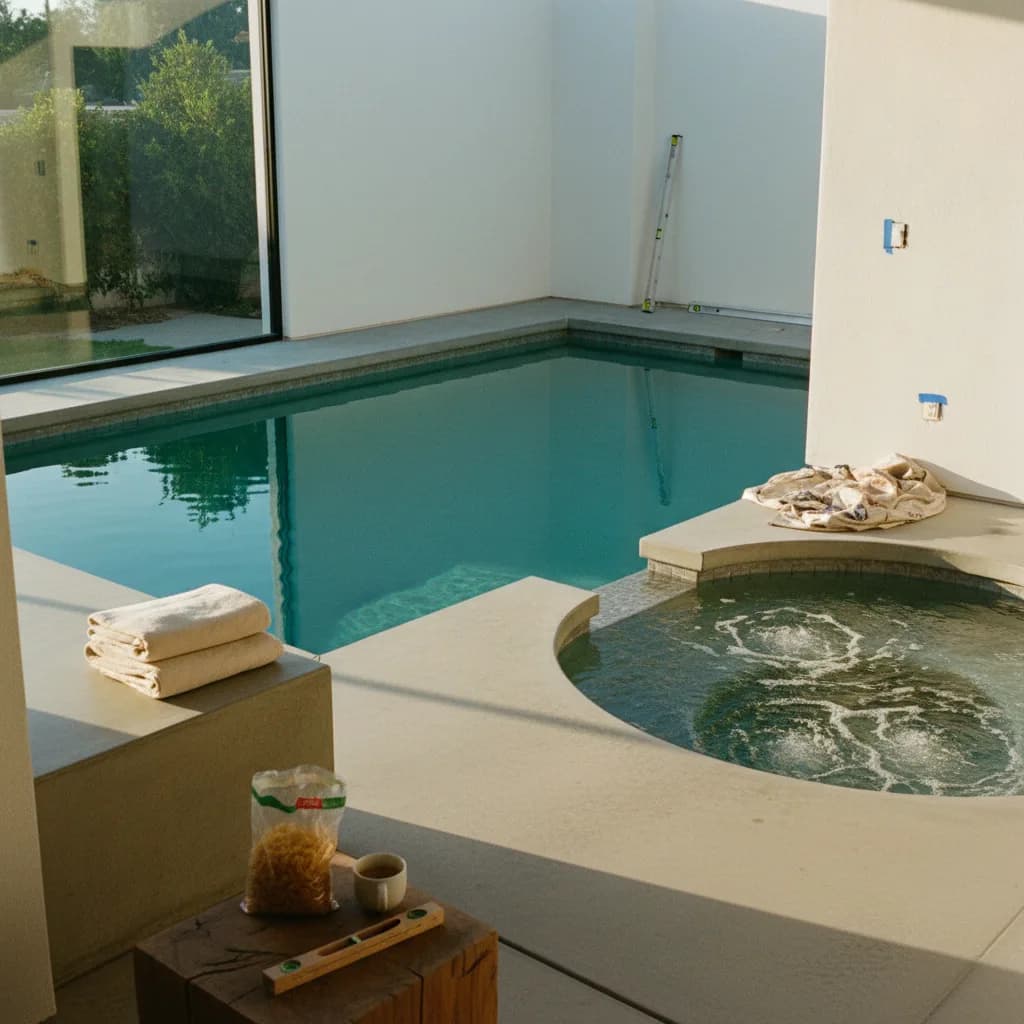
The era of the bright blue, kidney-shaped swimming pool in Los Angeles is officially over. In its place is a more architectural, atmospheric vision, featuring dark, moody finishes and expansive social Baja shelves. More than sixty percent of new pool permits filed with the Los Angeles Department of Building and Safety (LADBS) in late 2025 specified a dark-bottom plaster, a complete inversion from just five years ago. The new pool in Los Angeles isn't just for swimming; it's the home's primary living room.
In a Nutshell: The Pool as Architecture
- Umbrella Theme: The pool is no longer an amenity but an architectural extension of the home, designed for year-round visual appeal and integrated living.
- Top Trends: Dark plaster finishes, expansive Baja shelves for socializing, and natural stone decking.
- What's Being Replaced: Bright blue surfaces, standalone hot tubs, and basic concrete decking.
- What's Next: A full integration of wellness features, where the pool is flanked by a matching cold plunge, sauna, and outdoor kitchen, creating a complete backyard resort.
Dark & Moody Finishes Define the New Look
White and sky-blue plaster has been replaced by deep, reflective surfaces in charcoal, black, and deep grey. Showrooms from the Valley to the Westside report that finishes like PebbleTec's Black Onyx and Wet Edge's Prism Matrix in Black Magic now outsell traditional blues two-to-one for new construction. This creates a lagoon-like effect, where the water acts as a dark mirror reflecting the sky and surrounding landscape. This trend is especially prevalent in the design-forward enclaves of Silver Lake and Echo Park. Expect this to become the default, with lighter finishes seen as a traditionalist choice by 2027.
The Baja Shelf is Now a Social Hub
What was once a small, shallow step for toddlers is now an expansive in-water sun deck. These oversized Baja shelves, typically fifteen to eighteen inches deep, are being designed as true living spaces, furnished with in-pool chaises from brands like Ledge Lounger and outfitted with built-in umbrella sleeves. We're seeing this across sprawling lots in Sherman Oaks and renovated backyards in Mar Vista, where the shelf becomes the primary gathering spot. The next evolution is the integration of built-in tables and bubbler features, solidifying the shelf as the pool's social center.
Natural Stone Dominates Coping and Decking
The humble concrete paver is out. In its place are large-format slabs of natural stone, creating a smooth transition from the home's interior flooring to the outdoors. Honed limestone, silver travertine, and even sandblasted quartzite are the materials of choice, prized for their subtle texture and ability to stay cooler under the harsh San Fernando Valley sun. Pool contractors in Los Angeles are sourcing from stone yards that specialize in full-house palettes, ensuring the pool decking perfectly complements the kitchen's quartzite countertops. This is a permanent shift towards organic, high-end materials that treat the pool deck as a foundational design element.
Plunge Pools Maximize Smaller Lots
3 Los Angeles pool builders, editor-screened. 4 questions.
See my 3 matchesAs Los Angeles densifies, lot sizes shrink. The boom in Accessory Dwelling Units (ADUs), spurred by state laws like AB 68, has made the plunge pool the default choice for homeowners who want the lifestyle without sacrificing their entire backyard. These compact, jewel-box pools, often no larger than ten by fifteen feet, are designed for cooling off and socializing rather than swimming laps. They offer the same high-end finishes, like glass bead plaster and custom tile, but at a lower total project cost. This trend is redefining small backyards in neighborhoods from Atwater Village to Culver City.

Knife-Edge Designs Go Mainstream
Previously reserved for high-end commercial projects and hillside mansions in the Hollywood Hills, the knife-edge (or perimeter overflow) design is becoming a popular residential upgrade. In this design, the water level is flush with the deck, flowing over the edge into a hidden channel. This creates a flawless, continuous surface that feels incredibly sleek and architectural. While the engineering is more complex and adds to the pool cost in Los Angeles, the visual impact is undeniable. As fabrication techniques become more common, expect to see this detail appear in more modest projects seeking a high-design look.
Integrated Spas are a Must-Have Feature
The raised, rock-encrusted spa that looked like a backyard appendage is gone. Today's spa is fully integrated into the pool's geometry, often sharing the same water level and finished with the same interior plaster and coping. The separation is subtle, usually just a thin dam wall that allows heated spa water to cascade into the main pool. This approach creates a clean, unified aesthetic where the spa is a functional zone within a larger architectural form, not a separate feature. It's a non-negotiable for nearly every new pool contractor los angeles project we see.
Ozone and Saltwater Systems Replace Chlorine
Homeowner focus has shifted towards wellness and water quality. Traditional chlorine systems are being replaced almost universally by saltwater chlorine generators or advanced oxidation process (AOP) systems that combine ozone and UV. These systems produce water that is softer on the skin and eyes, with far less chemical odor. While the initial installation cost is higher, the reduced need for weekly chemical additions and the superior swimming experience are driving adoption across Los Angeles pools. This is less a trend and more the new standard for water sanitation.
Lighting Design Becomes Architectural
A single bulb in the deep end is no longer sufficient. Modern pool lighting is a sophisticated, multi-layered system designed to highlight the architecture of the pool and landscape. Low-voltage, color-changing LED lights from brands like Pentair and Jandy are used to illuminate steps, Baja shelves, and water features. The focus is on creating a warm, inviting glow (around 2700K) that makes the pool a stunning visual feature at night. The best designs integrate pool lighting with the overall landscape lighting plan, washing light on adjacent trees and pathways to create a cohesive scene.
Sources & Methodology
See the Renology Methodology for how sources are reviewed, ranges are normalized, and planning-data limits are handled.
Cost ranges in this guide draw on the following named industry sources, public agency datasets, and Renology editorial research.
- Renology Project of the Day (POTD) Field Data (2025-2026)
- Los Angeles Department of Building and Safety (LADBS) Permit Filings (Q4 2025)
- California Pool & Spa Association, Annual Report (2025)
- Remodeling Magazine, Cost vs. Value Report (2026)
- Interviews with LA-based pool contractors and designers (Q1 2026)
- Pebble Technology International, Dealer Sales Data (2025)

Renology Take
The throughline connecting these eight trends is the final evolution of California's indoor-outdoor living concept. The pool is no longer a separate, recreational object dropped into a backyard; it is the central, organizing feature of an outdoor residence. The material choices, from the dark plaster mirroring the sky to the limestone decking flowing from the living room, are about architectural cohesion. The functional upgrades, like social shelves and integrated spas, transform the pool from a place for activity into a place for living. This shift explains the rising investment. Homeowners are not just building a pool; they are commissioning a permanent, water-based expansion of their home's most important spaces, designed to be lived in, and looked at, year-round.
Frequently Asked Questions
How much does a new pool cost in Los Angeles in 2026?
What are the biggest factors that increase pool construction costs?
How long does it take to build a pool in Los Angeles?
What are the ongoing maintenance costs for a modern Los Angeles pool?
Los Angeles · pre-screened
Get 3 Los Angeles pool bids in 48 hours.
Our editors already vetted Los Angeles pool builders. Answer 4 questions and we send 3 written bids inside 48 hours, with the real price for your scope, not their inflated first-call number.
- Free, no commission
- Pre-screened locally
- Bids inside 48 hours
Takes about 60 seconds. We'll text you when bids arrive.
Sources
- Renology Project of the Day (POTD) Field Data
- Los Angeles Department of Building and Safety (LADBS) Permit Filings
- California Pool & Spa Association, Annual Report
- Remodeling Magazine, Cost vs. Value Report
- Interviews with LA-based pool contractors and designers
- Pebble Technology International, Dealer Sales Data