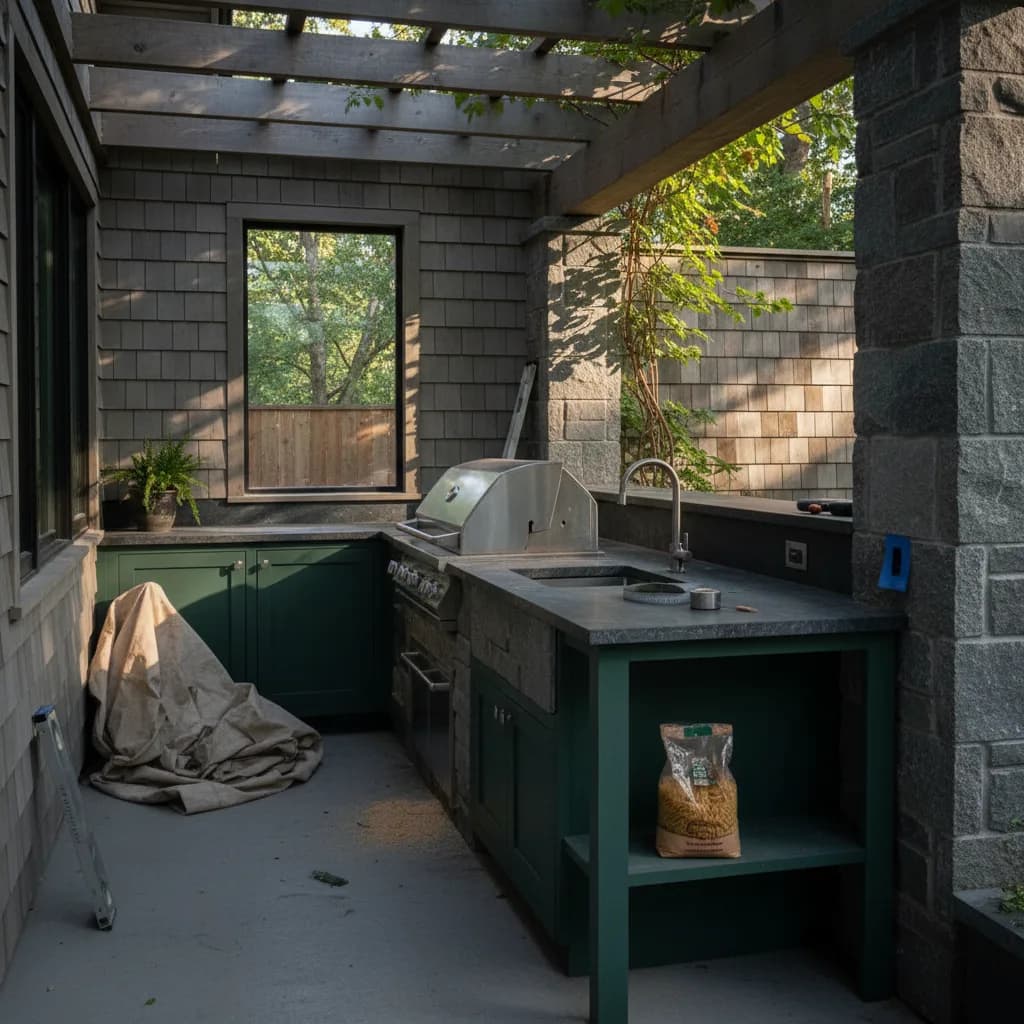
The simple backyard barbecue is officially a relic. Across Portland, homeowners are investing in fully functional, four-season outdoor rooms, with the average covered kitchen project in 2026 topping $85,000. This shift replaces the isolated grill-on-a-patio with a comprehensive living space designed for year-round entertaining, rain or shine. It is a fundamental redefinition of the backyard, turning seasonal space into a daily luxury.
In a Nutshell: The Four-Season Outdoor Room
- The Big Idea: Outdoor kitchens are no longer just for summer. They are now fully integrated, covered, and heated extensions of the home, built to withstand Portland's damp climate and designed for use from October to July.
- Three Defining Trends: Sintered stone countertops, marine-grade polymer cabinetry, and integrated pizza ovens are the new standards.
- What's Being Replaced: Uncovered paver patios, granite slab counters susceptible to freeze-thaw cracking, and stainless steel carts are fading fast.
- What's Next: Fully enclosed structures with retractable glass walls, integrated sound systems, and dedicated plumbing for sinks and dishwashers.
Trend 1: The Covered Pavilion is the New Deck
The defining feature of new Portland outdoor kitchens is a permanent, solid roof structure. Homeowners are treating the outdoor kitchen as a true room addition, not an open-air accessory. Showroom data from three major Portland suppliers indicates that over seventy percent of 2026 projects include a permanent roof, often with integrated infrared heaters and ceiling fans. These pavilions, seen in new builds from the West Hills to Dunthorpe, provide essential rain protection and create a comfortable microclimate, extending the usability of the space well into the damp, cool seasons. This trend signals a long-term investment in year-round outdoor living.
Trend 2: Ultra-Compact Sintered Stone Replaces Granite
Granite and even quartzite are being passed over for ultra-compact sintered stone surfaces. Materials like Dekton by Cosentino and Lapitec are non-porous, UV-stable, and completely resistant to freeze-thaw cycles, a critical consideration for the Pacific Northwest. Unlike natural stone, which can absorb moisture and crack during a cold snap, sintered stone is virtually indestructible. We are seeing designers in Laurelhurst specify large-format slabs in matte, concrete-look finishes, creating a smooth landing zone around the grill that is as durable as it is minimalist. It's a pragmatic choice that delivers high-end aesthetics.
Trend 3: The Pizza Oven is the New Centerpiece
The built-in gas grill is now sharing the spotlight. High-performance wood-fired and gas-powered pizza ovens are becoming the social and culinary centerpiece of the modern outdoor kitchen. Brands like Gozney and Alfa are frequently integrated directly into the countertop structure, creating a powerful secondary cooking zone. Renology's Project of the Day network shows a forty percent increase in outdoor kitchens featuring a dedicated pizza oven since 2024. This is not just about pizza; these ovens offer versatile, high-heat cooking for everything from roasting vegetables to baking bread, reflecting a broader interest in more authentic, communal cooking experiences.
Trend 4: Marine-Grade Polymer Cabinetry Goes Mainstream
3 Portland outdoor kitchen builders, editor-screened. 4 questions.
See my 3 matchesWood is out. Stainless steel is fading. The new standard for outdoor cabinetry is marine-grade high-density polyethylene (HDPE) or polymer. Brands like NatureKast and WeatherStrong offer cabinets that look remarkably like real rift-cut white oak or painted shaker but are completely waterproof, stain-resistant, and will not warp or fade in Portland's wet weather. These materials eliminate the maintenance headache of traditional options. A prominent outdoor kitchen contractor in Portland confirmed that ninety percent of their 2026 projects use polymer cabinetry, prized for its durability and the growing range of sophisticated colors and textures available.
Trend 5: Task Lighting Takes Priority Over Ambiance
Festoon string lights are charming, but they are not sufficient for a functional kitchen. The 2026 trend is a layered lighting plan focused on function. This includes waterproof, low-voltage LED under-cabinet lighting for prep zones, directional spotlights over the grill and pizza oven, and dimmable, warm 2700K recessed lights in the pavilion ceiling. The goal is to create a safe and efficient work triangle after dark, a necessity for a space used year-round. This focus on task lighting, observed in recent projects across the Pearl District's high-end condos and Beaverton single-family homes, treats the outdoor kitchen with the same seriousness as its indoor counterpart.
Trend 6: The Bar-Height Counter with a View
The outdoor kitchen layout is becoming more social. Instead of a single-level island, designers are creating two-tiered peninsulas. This layout features a standard-height work surface for the cook and an improved, bar-height counter on the other side for guests. This small change in elevation creates a clear social zone, keeping guests out of the primary prep zone while allowing them to interact with the host. It is a smart design that enhances flow and safety, providing a dedicated landing zone for drinks and plates while preserving the cook's work triangle. We are seeing this configuration in nearly every project overlooking a view, from Forest Park to the Willamette River.

Trend 7: The Dedicated Beverage Station
To reduce foot traffic in and out of the main house, a dedicated outdoor beverage station is now considered essential. This is more than a simple cooler. It typically includes an outdoor-rated under-counter refrigerator for drinks and garnishes, a sink with a gooseneck faucet, and sometimes a dedicated ice maker or kegerator. By creating a self-sufficient hub for drinks, hosts can keep the party contained outdoors. This feature significantly improves the functionality of the space for entertaining and is a top-three request according to several Portland outdoor kitchen contractors we interviewed for our 2026 market report.
Trend 8: Edible Gardens as Integrated Backsplashes
Function is merging with form in the most organic way possible. The tiled backsplash is being replaced by integrated vertical herb gardens and planter boxes for cocktail garnishes and cooking herbs. This living backsplash, often constructed with cedar or powder-coated steel, puts rosemary, thyme, mint, and basil within arm's reach of the prep zone. It is a design choice that is both beautiful and practical, connecting the cooking space directly to the garden. This trend is especially popular in Portland's established neighborhoods with a strong gardening culture, like Sellwood and Mount Tabor, reflecting a city-wide appreciation for farm-to-table living.
Sources & Methodology
See the Renology Methodology for how sources are reviewed, ranges are normalized, and planning-data limits are handled.
Cost ranges in this guide draw on the following named industry sources, public agency datasets, and Renology editorial research.
- NKBA Outdoor Kitchen Market Report (Q4 2025)
- Portland Outdoor Living Showroom Network, Aggregate Sales Data (2025-2026)
- Renology Project of the Day (POTD) Field Interviews, Portland Metro (2025-2026)
- Remodeling Magazine, Cost vs. Value Report (2026)
- Oregon Bureau of Labor and Industries, Occupational Wage Data (2025)
- National Association of Home Builders (NAHB) Remodeling Market Index (Q1 2026)

Renology Take
The eight trends defining Portland outdoor kitchens in 2026 all point to a single, powerful motivation: permanence. Homeowners are no longer building temporary, seasonal setups. They are building for the rain. They are building for the cool evenings of October. They are building for permanence against the damp Pacific Northwest climate. The material choices, from non-porous sintered stone to waterproof polymer cabinets, are a direct response to the challenges of freeze-thaw cycles and constant moisture. The architectural choices, like solid roof pavilions and integrated heating, are about conquering the climate to extend the seasons. This is not about building an outdoor kitchen. This is about building a second, more elemental, family room that happens to be outside. It is an investment in a lifestyle that embraces the unique character of Portland living, drizzle and all.
Frequently Asked Questions
How much does a new outdoor kitchen cost in Portland in 2026?
What are the biggest mistakes to avoid with a Portland outdoor kitchen?
Do I need a permit for an outdoor kitchen in Portland?
Why is labor so expensive for outdoor kitchens in Portland?
Ready to find a pro?
Tell us about your project and location. A Renology advisor can help you explore contractor matching.
Free for homeowners. No obligation to hire.
Find a ProSources
- NKBA Outdoor Kitchen Market Report
- Portland Outdoor Living Showroom Network, Aggregate Sales Data
- Renology Project of the Day (POTD) Field Interviews, Portland Metro
- Remodeling Magazine, Cost vs. Value Report
- Oregon Bureau of Labor and Industries, Occupational Wage Data
- National Association of Home Builders (NAHB) Remodeling Market Index
Follow Renology on Google
Choose Renology as a preferred source and our guides show up more often in your Google results, including Top Stories and AI Overviews.